
Building the Battlefield: Understanding Unit Roles in Remnant Chronicles
In Remnant Chronicles, force construction is more than list-building — it is strategic doctrine. Every Task Force represents a deliberate allocation of Command Points, battlefield philosophy, and leadership structure.
Whether you favor rapid maneuver, armored dominance, or elite surgical strikes, understanding unit roles is the key to mastering the Three Spheres.
The Five Pillars of a Task Force
Each force is constructed from five core categories of units. These categories define battlefield role, command investment, and strategic flexibility.
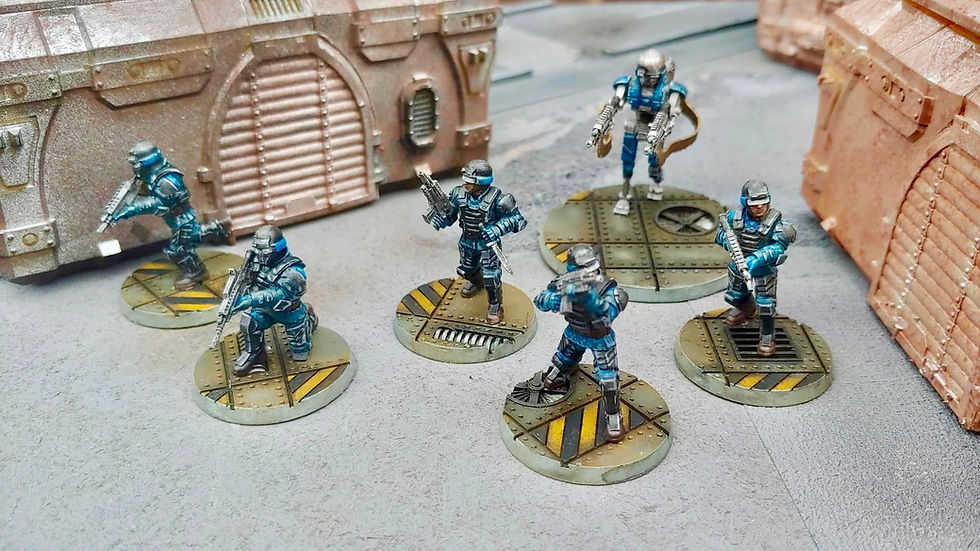
Light Core (Cost: 2 | Up to 5 per Tier)
Examples: Infantry, Auxiliaries, Weapon Specialists, Scouts, Technical Units
Light Core units are the backbone of your Task Force.
They:
Hold objectives
Screen heavier assets
Provide tactical flexibility
Generate valuable Resource Points
They are affordable, numerous, and essential for mission success. A commander who neglects Light Core units may find themselves outmaneuvered despite superior firepower.
Doctrine Insight:
Light Core wins missions. Heavy units win battles. You need both.

Heavy Core (Cost: 4 | Up to 4 per Tier)
Examples: Powered Infantry, Support Robots, APCs, Utility Vehicles, Light RIGs
Heavy Core units represent escalation.
They:
Push contested objectives
Absorb punishment
Anchor advancing lines
Apply sustained pressure
These are the units that change tempo. A Heavy Core deployment signals commitment.
Doctrine Insight:
Heavy Core establishes dominance where Light Core secures presence.
Light Support (Cost: 6 | Up to 3 per Tier)
Examples: Combat Robots, IFVs, Crewed Weapons, Light Artillery, Light Air Support, Main Battle RIGs
Light Support units provide specialized force multiplication.
They:
Deliver precision firepower
Reinforce breakthroughs
Provide mobile suppression
Enable combined arms tactics
These units reward synergy. Their value depends heavily on the composition of your force.
Doctrine Insight:
Light Support transforms strategy into execution.
Heavy Support (Cost: 8 | Up to 2 per Tier)
Examples: MBTs, Emplacements, Heavy Artillery, Heavy Air Support
Heavy Support units are battlefield declarations.
They:
Shape entire engagements
Control lanes of advance
Dominate through threat projection
Demand immediate enemy response
Because of their limited availability, choosing Heavy Support is a defining decision.
Doctrine Insight:
Heavy Support does not support the army — the army supports Heavy Support.
Special Issue (Cost: 10 | 1 per Tier)
Examples: Special Forces, Aircraft Overwatch
Special Issue units are rare assets representing exceptional capability.
They:
Break stalemates
Operate outside conventional doctrine
Exploit critical moments
Only one may be taken per Tier. This is intentional. These units should feel consequential.
Doctrine Insight:
Special Issue is not insurance. It is opportunity.

Command Points & Tier Play
Each game Tier determines your total Command Point allotment.
After building your force:
Your Starting Command Points can never exceed your Tier total.
If using Tactical Command Cards, subtract 9 Command Points from your total.
Example:
In a Tier 5 (50-point) game, if you spend 45 Command Points building your force, you begin the game with 5 remaining — not 50.
This system ensures:
Clear strategic investment
Balanced starting resources
Meaningful tradeoffs between force size and tactical flexibility
The Role of Leadership
No Task Force operates without command structure.
Your Task Force Commander must be the highest-ranking model selected during force building.
Rank costs:
RankCost
Tier Requirement
Sergeant Equivalent 3 No Limit
Senior Enlisted 5 1 per Force
Junior Officer 7 Tier 3+
Senior Officer 9 Tier 4+
Leadership impacts:
Resource Point generation
Battlefield authority
Command continuity if the leader is eliminated
If the Mission Commander falls, command transfers at the start of the next round to the next highest ranking officer .
This preserves structure — and forces players to protect their command elements.

Specialist Task Forces
Specialist Task Forces represent iconic formations within each faction.
They:
Follow core army-building rules
Offer alternative composition pathways
Emphasize narrative or thematic play
Designed primarily for casual or narrative games, they may be used in tournaments at Organizer discretion.
These forces allow players to field:
Boarding detachments
Armored regiments
Recon task groups
Elite planetary assault forces
They add identity without breaking balance.
Vehicles & Resource Economy
Vehicles begin with 20 Resource Points.
Unlike infantry, vehicles:
Do not use the Gear:X limitation
May purchase upgrades freely within Resource constraints
Weapons and upgrades must still be paid for individually.
This creates deep customization while preserving cost integrity.
The Philosophy of Force Construction
Remnant Chronicles is not about maximizing stats.
It is about balance.
Too many Light units? You lack punch.
Too much Heavy Support? You lack board control.
Overinvest in officers? You lose presence.
Underinvest in leadership? You lose cohesion.
Every force is a statement of doctrine.
Every list tells a story.


