
Building the Battlefield in Remnant Chronicles
Every war story begins before the first shot is fired.
Before the armored columns roll forward. Before orbital fire tears the sky apart. Before infantry squads disappear into smoke and ruined streets.
The battlefield itself decides how the war will be fought.
One of the core goals behind Remnant Chronicles has always been making every game feel different. No two worlds should fight the same way. A shattered refinery moon should create a completely different battle than a flooded colony city or a burned-out industrial frontier.
That begins with terrain.

The battlefield setup system in Remnant Chronicles is designed to be fast, flexible, and scalable depending on the kind of experience players want. Whether you are introducing a new player to the game in a quick pickup match or running a high-stakes competitive campaign, the setup process adapts to the way you want to play.
The setup process itself is intentionally straightforward. Players move step by step through battlefield preparation, creating a modular experience that keeps games moving while still giving players meaningful control over the table.
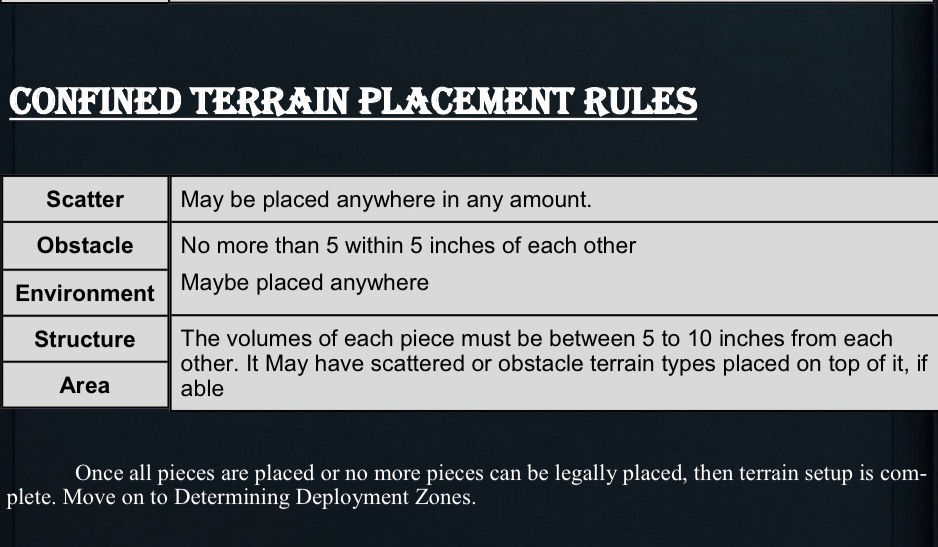
Terrain placement is one of the most important parts of the game because terrain is not decoration in Remnant Chronicles. It shapes movement, fire lanes, defensive positions, ambushes, and survival itself.
Some battlefields become brutal urban kill zones where every street corner is contested. Others become wide-open wastelands dominated by armored warfare and long-range firepower. Dense industrial sectors can force infantry into savage close-range fighting while orbital debris fields and ruined colonies create unpredictable engagements full of chaos and opportunity.
To support different styles of play, Remnant Chronicles uses three terrain setup methods: Casual, General, and Competitive.
Casual Terrain Placement is designed for speed and accessibility. It is perfect for pickup games, new commanders, or nights where players want to get models onto the table quickly and start rolling dice. The system is simple: divide the battlefield into quarters, heavily fill one quarter with terrain, then spread the pieces across the table together. The result is fast, organic, and surprisingly cinematic battlefields every time

General Terrain Placement is the standard experience for most games. This is where battlefield planning becomes part of the strategy itself. Terrain placement becomes more deliberate, creating balanced but highly thematic warzones that reward tactical thinking and battlefield awareness.

Competitive Terrain Placement follows the same foundation while creating consistency for organized events and tournaments. Even in competitive environments, the battlefield remains dynamic and immersive rather than sterile or repetitive.
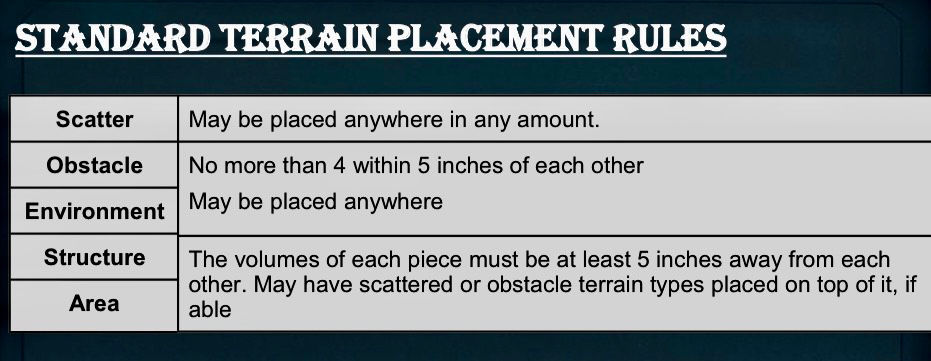
One of the biggest design goals behind the terrain system was making setup feel collaborative instead of restrictive. Players are encouraged to build battlefields that tell stories. A burning Coalition shipyard. A Protectorate refinery under siege. A ruined city abandoned after the First Void War. The terrain system exists to support those moments, not get in the way of them.
Because in The Remnant Chronicles, the battlefield is never just a board.

It is the front line in the Three Spheres.


